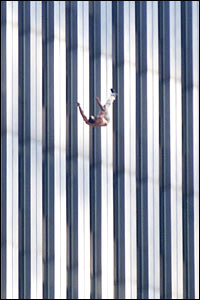
...And the Damage Done
Ten years later, some things are a blip, no matter the publicity.
While others abide, less noted.

New Yorkers, hug a fireman today—for the ones who died because "modernization" meant moving Disaster Operations from the safety of One Police Plaza to the 25th floor of the already-attacked-once 1 WTC, not making certain radio communications worked.
Then, if you can, go visit the Empty Chairs. If you're really brave, try to explain to your kids why the life of the secretary for the NYSSA—a kind woman who read Laurell Hamilton books and had a life outside of Series 7 and 63 and 24 and 8 and...—was worth so much less than a Cantor Fitzgerald salesman who was intermediating between two financial intermediaries in an already-overcrowded space.
Then try to explain why 11 Sep 2001 was an act of terror, but 11 Sep 1973 was a heroic effort that lead to The Chicago Boys (who presided over the only period when that country grew slower than the rest of the area) and the Chilean Pension System so beloved by Herman Cain, so hated by even its originator.
And, if I haven't offended enough people yet: those of you in DC and Boston who had friends and relatives at the Pentagon or friends and relatives on the flights, wonder why the Two Towers get all the attention.
Happy September 11th, and What It Hath Wrought.
Never forget.
While others abide, less noted.

New Yorkers, hug a fireman today—for the ones who died because "modernization" meant moving Disaster Operations from the safety of One Police Plaza to the 25th floor of the already-attacked-once 1 WTC, not making certain radio communications worked.
Then, if you can, go visit the Empty Chairs. If you're really brave, try to explain to your kids why the life of the secretary for the NYSSA—a kind woman who read Laurell Hamilton books and had a life outside of Series 7 and 63 and 24 and 8 and...—was worth so much less than a Cantor Fitzgerald salesman who was intermediating between two financial intermediaries in an already-overcrowded space.
Then try to explain why 11 Sep 2001 was an act of terror, but 11 Sep 1973 was a heroic effort that lead to The Chicago Boys (who presided over the only period when that country grew slower than the rest of the area) and the Chilean Pension System so beloved by Herman Cain, so hated by even its originator.
And, if I haven't offended enough people yet: those of you in DC and Boston who had friends and relatives at the Pentagon or friends and relatives on the flights, wonder why the Two Towers get all the attention.
Happy September 11th, and What It Hath Wrought.
Never forget.

cross-posted from skippy the bush kangaroo
Labels: 11Sep1973, 11Sep2001, cost of war, economic development, GWOT, human capital, rule of law, The Memory Hole
posted by Ken Houghton at 08:46
0 comments